
Chicken Noodle Soup: Irresistible 105-Minute Comfort
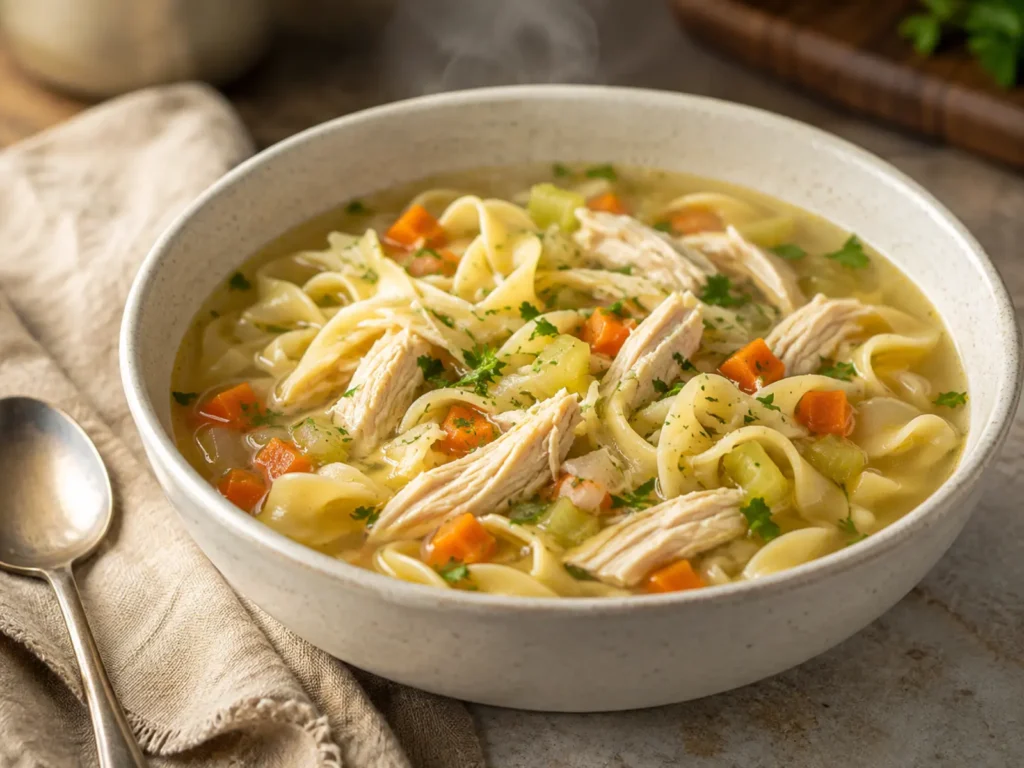
Chicken Noodle Soup is the kind of dinner that makes a cool evening feel immediately warmer. This version builds its flavor in one pot, beginning with onion, carrots, and celery softened in olive oil before garlic, herbs, chicken, and broth join the simmer. The long, gentle cooking time gives the broth a savory homemade character and leaves the chicken tender enough to pull apart with two forks. Egg noodles go in near the end, so they become tender without disappearing into the soup, and fresh parsley adds a clean finish. The result is brothy rather than creamy, generously filled without becoming heavy, and practical enough for a family dinner. It also makes a large batch, which means one cooking session can provide tonight’s meal plus useful leftovers for another busy day.
Why This Chicken Noodle Soup Tastes So Comforting
The flavor develops in layers instead of relying on one strong seasoning. Onion, carrots, and celery create the aromatic foundation. Cooking them before adding liquid softens their raw edges and gives their natural sweetness time to emerge. Garlic, basil, thyme, bay leaf, and black pepper then warm in the same pot, which helps their fragrance spread through the olive oil before the broth is added.
Chicken breasts simmer directly in the seasoned broth. As they cook, the meat flavors the liquid while the liquid protects the chicken from the dry heat that can make lean breast meat tough. Maintaining a visible but gentle simmer is important: the chicken needs steady heat to become easy to shred, but an aggressive boil can make the broth cloudy and the meat firmer.
Important Ingredients and Their Roles
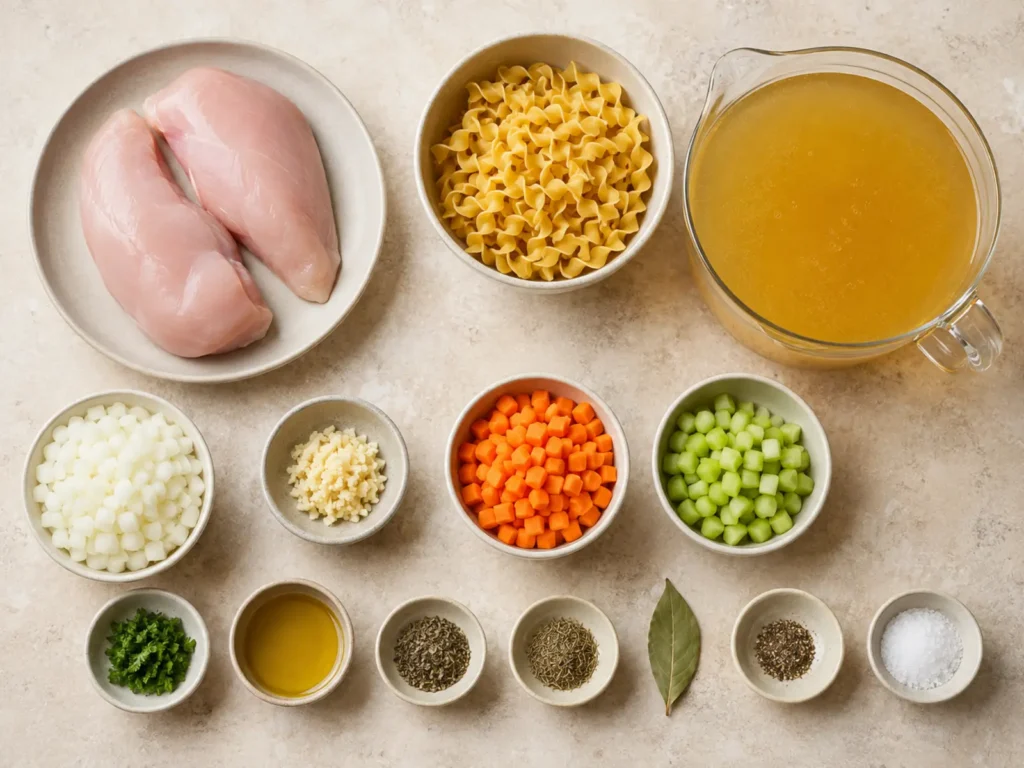
- Boneless, skinless chicken breasts: The chicken cooks in the broth until tender enough to shred, providing lean meat and savory flavor throughout the soup.
- Chicken broth: Broth forms the main body of Chicken Noodle Soup, so its salt level and flavor have a major effect on the finished bowl.
- Egg noodles: Their broad, tender shape catches bits of chicken and vegetables while staying pleasantly distinct when cooked just until tender.
- Yellow onion: Onion begins the aromatic base and adds subtle sweetness after it softens in olive oil.
- Carrots: Carrots contribute color, gentle sweetness, and a soft bite that contrasts with the noodles.
- Celery: Celery brings a fresh savory note and completes the classic soup vegetable base.
- Garlic: Garlic deepens the aromatics after the vegetables have softened, without dominating the broth.
- Dried basil, thyme, and bay leaf: These herbs build a rounded background flavor during the long simmer.
- Fresh parsley: Parsley is reserved for the end so its color and clean herbal flavor remain noticeable.
- Olive oil, salt, and black pepper: Olive oil carries the aromatics, while careful seasoning brings the broth, chicken, vegetables, and noodles into balance.
See the recipe card below for the complete ingredient list and exact measurements.
How to Make Chicken Noodle Soup in One Pot
Begin by preparing all the vegetables before heating the pot. Dice the onion, carrots, and celery into pieces that are small enough to fit easily on a spoon but large enough to remain recognizable after simmering. Mince the garlic and parsley separately, keeping the parsley aside for the final step.
Warm the olive oil in a large soup pot over medium heat. Add the onion, carrots, and celery, then cook until they soften and the onion loses its raw, opaque appearance. Stir occasionally so the vegetables cook evenly without browning heavily. Add the garlic, dried herbs, bay leaf, black pepper, and the first portion of salt. Continue cooking briefly until the garlic and herbs smell fragrant.
Nestle the chicken breasts among the vegetables and pour in the broth. Cover the pot and bring the liquid to a boil, then immediately reduce the heat to a low, steady simmer. Keep enough heat under the pot that small bubbles continue to rise throughout the one-hour simmer. If the liquid becomes completely still, the chicken may take longer to become tender enough to shred.
Remove the cooked chicken to a clean plate and pull it into bite-size shreds with two forks. For a dependable safety check, the thickest part should reach the USDA safe minimum temperature of 165°F. Taste the broth before adding more salt because prepared chicken broth can vary considerably in sodium.
Bring the soup back to a boil and add the egg noodles. Cook until tender, using the noodle texture rather than the clock alone as the final guide. Return the shredded chicken to the pot, stir until hot, and taste once more. Remove the bay leaf, finish with fresh parsley, and serve the Chicken Noodle Soup while the broth is steaming and the noodles are still at their best.
Recipe-Specific Success Tips
- Keep the chicken at a genuine simmer for the full cooking period. A pot that is barely warm will not tenderize it as effectively, while a violent boil can make the meat less delicate.
- Cut the carrots and celery evenly. Consistent pieces soften at a similar rate and make the finished soup easier to eat.
- Add the garlic after the first vegetables have softened. Garlic can scorch if it spends too long against the bottom of the pot before liquid is added.
- Taste before every additional salt adjustment. Broths and bouillon products differ widely, so the correct final amount depends on the product used.
- Cook the noodles only until tender. They continue absorbing broth as Chicken Noodle Soup stands, especially during refrigerated storage.
- Remove the bay leaf before serving. It gives up its flavor during simmering but is not pleasant to eat.
- Use a food thermometer rather than color alone to confirm chicken doneness; the USDA explains why temperature is the reliable safety measure.
Supported Variations and Substitutions
Bone-in chicken breasts, thighs, or drumsticks can replace boneless breasts. Bones add flavor to the broth, but they must be removed completely when the cooked meat is shredded. Cooking time and doneness should still be confirmed rather than guessed from appearance.
Another noodle shape can work if egg noodles are unavailable. Choose a pasta that fits comfortably on a soup spoon and follow its texture as it cooks, because thickness and cooking time vary. For leftovers with firmer noodles, cook the pasta separately and add it to individual bowls; this prevents the entire batch from continuing to absorb broth in the refrigerator.
The broth can be made with a concentrated chicken base or a prepared boxed broth. Compare labels and season cautiously because sodium levels differ. If you prefer the original bone-in approach, water can replace prepared broth while the bones and long simmer build flavor, but this method may need more salt at the end.
Serving Ideas for a Cozy Dinner
Serve Chicken Noodle Soup hot in deep bowls, making sure each portion receives broth, shredded chicken, vegetables, and noodles. A final sprinkle of fresh parsley gives the surface color without covering the classic flavor. Crusty bread, sourdough, dinner rolls, or a simple green salad can turn the soup into a complete fall dinner.
Storage, Freezing, and Reheating
Cool leftover Chicken Noodle Soup promptly and divide it into shallow covered containers. Refrigerate it for 3 to 4 days or freeze portions for up to 3 months, following the recipe’s supported guidance. The federal cold food storage chart also lists 3 to 4 refrigerated days and 2 to 3 months in the freezer for soups and stews.
The noodles absorb broth and become softer during storage. If you expect substantial leftovers, storing cooked noodles separately gives you better control: place noodles in each bowl, then ladle hot soup over them. Frozen portions may also have a better texture when made with broth, chicken, and vegetables only, followed by freshly cooked noodles after reheating.
Reheat soup on the stovetop until it reaches a rolling boil, stirring so the chicken and vegetables heat evenly. Add a splash of broth or water if the noodles have absorbed too much liquid. For microwave reheating, cover loosely, stir partway through, and check for cold spots. Federal leftover safety guidance recommends reheating leftovers to 165°F.
A Classic Dinner Worth Keeping
Chicken Noodle Soup rewards a little simmering time with tender chicken, savory broth, soft vegetables, and noodles in every spoonful. The one-pot method keeps the preparation manageable, while careful seasoning and properly timed noodles protect the classic flavor and texture. Serve it for a cozy fall dinner, then store the extra portions correctly for an easy comfort-food meal later in the week.
Frequently Asked Questions About Chicken Noodle Soup
How do I keep Chicken Noodle Soup noodles from becoming mushy?
Cook the egg noodles only until tender and avoid holding the finished pot over heat for a long time. For planned leftovers, cook the noodles separately and store them apart from the broth. Add a portion to each bowl before serving so they absorb less liquid between meals.
Can I use chicken thighs in Chicken Noodle Soup?
Yes. The source recipe supports thighs, drumsticks, and bone-in chicken breasts as alternatives. Bone-in pieces can add extra broth flavor, but remove all bones and skin when shredding the cooked meat. Always confirm that the chicken reaches a safe internal temperature rather than relying only on tenderness.
Why does my soup need more or less salt?
Chicken broth and concentrated soup bases can contain very different sodium levels. Begin with the smaller stated amount, taste after the chicken simmers, and add more gradually. Salting in stages prevents an already-seasoned broth from becoming too salty once the liquid reduces and the noodles are added.
Can I freeze Chicken Noodle Soup?
Yes, the soup can be frozen in individual portions for up to 3 months after it has cooled in the refrigerator. Noodles become softer after freezing and reheating, so for the best texture, freeze the broth, chicken, and vegetables without noodles and prepare fresh noodles when serving.
Chicken Noodle Soup: Irresistible 105-Minute Comfort
- Total Time: 1 hour 45 minutes
- Yield: 8 servings, about 1 1/2 cups each 1x
Description
Chicken Noodle Soup combines tender shredded chicken, egg noodles, carrots, celery, and fragrant herbs in a savory golden broth. This one-pot comfort dinner simmers slowly for deep homemade flavor and makes eight generous servings for family meals or convenient leftovers.
Ingredients
- 1 medium yellow onion, diced
- 3 garlic cloves, minced
- 4 carrots, peeled and diced
- 2 ribs celery, diced
- 1 tablespoon fresh parsley, minced
- 2 tablespoons olive oil
- 1 teaspoon dried basil
- 1/2 teaspoon dried thyme
- 1 bay leaf
- 1/4 teaspoon freshly cracked black pepper
- 1 to 3 teaspoons salt, divided
- 2 boneless, skinless chicken breasts
- 8 cups chicken broth
- 6 ounces uncooked egg noodles
Instructions
- Dice the onion, mince the garlic, peel and dice the carrots, dice the celery, and mince the parsley. Reserve the parsley for finishing.
- Heat the olive oil in a large soup pot over medium heat. Add the onion, carrots, and celery and cook for about 6 minutes, stirring occasionally, until softened.
- Stir in the garlic, basil, thyme, bay leaf, black pepper, and 1 teaspoon salt. Cook for 5 minutes until fragrant.
- Add the chicken breasts and pour in the chicken broth. Cover, bring to a boil over high heat, then reduce to low and maintain a steady simmer for 1 hour.
- Transfer the chicken to a clean plate and shred it with two forks. Taste the broth and add more salt gradually if needed.
- Increase the heat to high, add the egg noodles, and boil for about 7 minutes or until tender.
- Return the shredded chicken to the pot and heat through. Remove the bay leaf, taste for seasoning, finish with fresh parsley, and serve hot.
Notes
- Bone-in chicken breasts, thighs, or drumsticks may be used; remove every bone when shredding the cooked meat.
- Maintain a visible simmer during the full hour so the chicken becomes tender enough to shred.
- Prepared broths vary in sodium, so taste before adding the second or third teaspoon of salt.
- Refrigerate cooled soup for 3 to 4 days or freeze individual portions for up to 3 months.
- For firmer leftovers, store cooked noodles separately and add them when reheating.
- Nutrition information is an estimate calculated per serving and may vary by ingredient brand and portion size.
- Prep Time: 15 minutes
- Cook Time: 1 hour 30 minutes
- Category: Dinner
- Method: Stovetop
- Cuisine: American
Nutrition
- Serving Size: 1 serving, about 1 1/2 cups
- Calories: 213
- Sugar: 5 g
- Sodium: 1263 mg
- Fat: 7 g
- Saturated Fat: 1.5 g
- Unsaturated Fat: 5.5 g
- Trans Fat: 0 g
- Carbohydrates: 21 g
- Fiber: 2 g
- Protein: 17 g
- Cholesterol: 45 mg
Keywords: Chicken Noodle Soup, Soup Recipes, Dinner Recipes, Cozy Fall Recipes, Easy Soup Recipes, One Pot Meals, Comfort Food